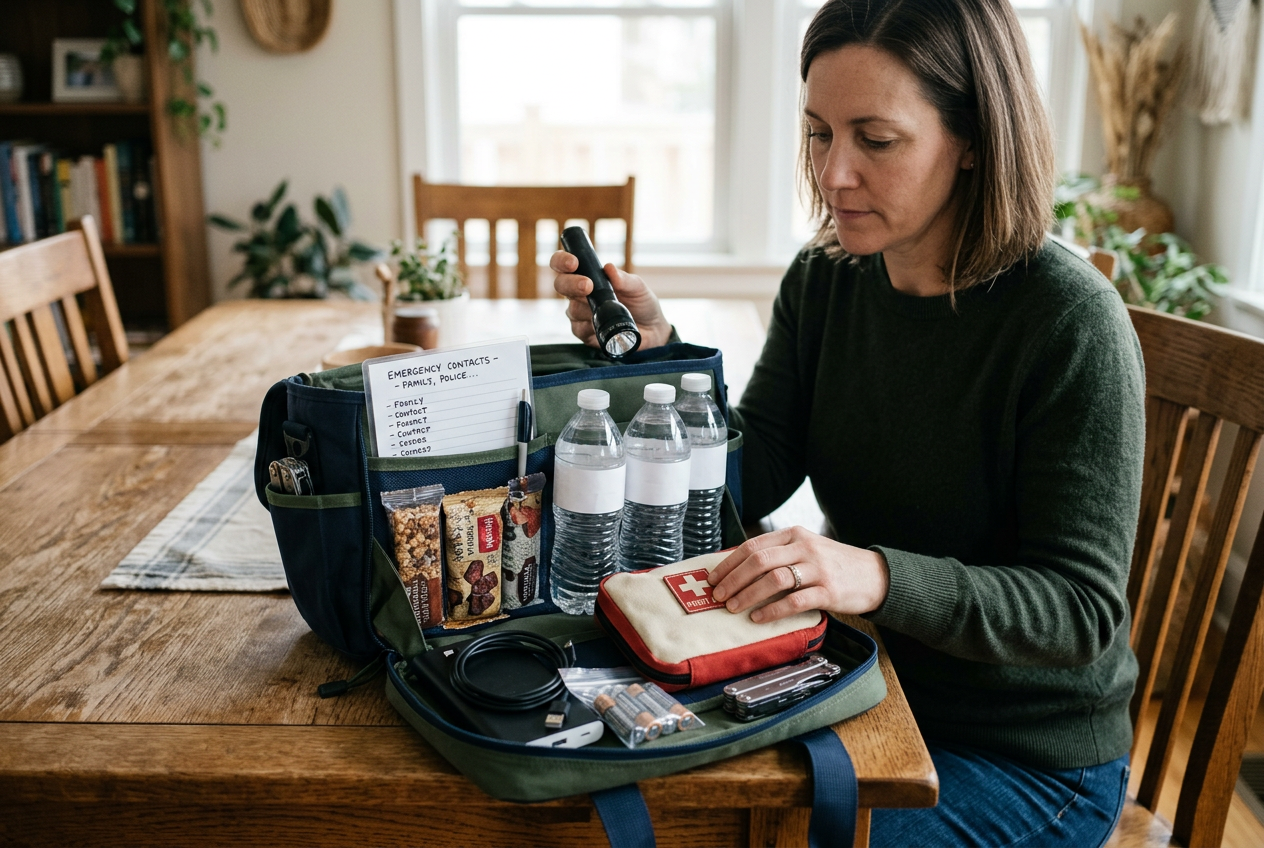
Preparedness is easier when it is broken into small steps. A basic kit is not one-size-fits-all: local hazards, household size, medical needs, mobility, pets, and the possibility of being without power all affect what belongs in it.
Begin with a household plan
Write down how household members will reconnect if phones or internet service are interrupted. Choose an out-of-area contact, a meeting place, and a way to receive local alerts. Keep important phone numbers on paper as well as in a device.
Ask household members what they would need to leave home quickly or stay safely at home. Include children, older adults, people with disabilities, and pets in the conversation.
Cover basic needs first
Ready.gov recommends storing at least one gallon of water per person per day for several days, for drinking and sanitation. Needs vary with climate, age, health, and activity. Rotate stored water and food according to product instructions and local guidance.
Add shelf-stable food, a manual can opener, a flashlight, extra batteries or a charged power bank, a first-aid kit, hygiene supplies, and copies of key documents in a waterproof container. Keep the kit somewhere household members can reach it.
Plan for medicines and accessibility
Keep a current list of medicines, allergies, health conditions, and emergency contacts. Ask a pharmacist or clinician how to prepare for an interruption in access to prescription medicines; do not change doses or storage based on a general checklist.
If anyone uses mobility equipment, hearing aids, oxygen, refrigerated medicines, or assistive communication devices, ask the relevant provider how to plan for charging, backup power, and safe storage. Include supplies for service animals and pets.
Review the kit twice a year
Check expiration dates, replace batteries as needed, update contact information, and make sure the kit still fits your household. A reminder when clocks change or at the start of hurricane or wildfire season can make the review easier to remember.
Follow instructions from local emergency managers during an actual event. A kit supports preparation; it cannot replace evacuation orders, emergency services, or advice tailored to a specific hazard.
Sources & further reading
We used these public resources when preparing this guide. Open the source for its full, current guidance.