Dry Winter Skin: NIA and MedlinePlus Point to Warm, Not Hot, Water and Daily Moisturizer
The National Institute on Aging says older adults may make less sweat and oil, and lists simple home steps for dry, itchy skin.
On this page
Key takeaways
- The National Institute on Aging says older adults may produce less sweat and oil, and that hot baths and showers can make dry skin worse.
- NIA's home steps include a daily moisturizer, mild soap with warm water, no bath oil because of fall risk, and a humidifier.
- MedlinePlus advises short, warm baths or showers of 5 to 10 minutes, once a day, and moisturizing 2 to 3 times a day or as often as needed.
By the numbers
5 to 10 minutes
Suggested length of a bath or shower
Review date July 3, 2025
Only once a day
Suggested bathing frequency
Review date July 3, 2025
2 to 3 times a day, or as often as needed
Suggested moisturizing frequency
Review date July 3, 2025
Every day
NIA moisturizer frequency
Content reviewed February 11, 2025
Why skin dries out
The National Institute on Aging (NIA) says that with aging, the outer layer of skin gets thinner, paler and less stretchy, and older adults may produce less sweat and oil from the glands in their skin. It says many older people develop dry spots, often on the lower legs, elbows and lower arms, and that patches may itch and feel rough and scaly.
Aging is not the only factor. NIA lists drinking too little water, too much time in the sun, living in a dry environment and smoking as things that can leave skin feeling dry and rough. MedlinePlus, the National Library of Medicine's consumer health site, lists cold, dry winter air and furnaces that heat the air and remove moisture among the causes of dry skin, along with long hot baths or showers and frequent hand washing.
What dry skin looks and feels like
MedlinePlus says dry skin occurs when skin loses too much water and oil, is common and can affect anyone at any age. Symptoms it lists are scaling, flaking or peeling skin, skin that feels rough, tightness especially after bathing, itching, and cracks that may bleed. It commonly shows up on the hands, feet, arms and lower legs.
Beyond water temperature, MedlinePlus lists some soaps and detergents, skin conditions such as eczema and psoriasis, and certain medicines among possible causes. Its self-care list also says to avoid scrubbing, to wear soft, comfortable clothing and avoid rough fabrics like wool, and to wash clothes with detergents free of dyes or fragrances.
Bathing habits
NIA says that taking hot baths and showers, or using too much soap, antiperspirant or perfume, can make dry skin worse. For bathing, it suggests mild soap and warm, not hot, water.
MedlinePlus gives specifics: take short, warm baths or showers of 5 to 10 minutes, avoid hot water, and bathe only once a day. It suggests gentle skin cleansers or soaps with added moisturizers in place of regular soap, and says to use soap or cleansers only on the face, underarms, genital areas, hands and feet.
NIA adds that a dermatologist or primary care doctor can help with which skin care products are safe and effective for you.
Moisturizing
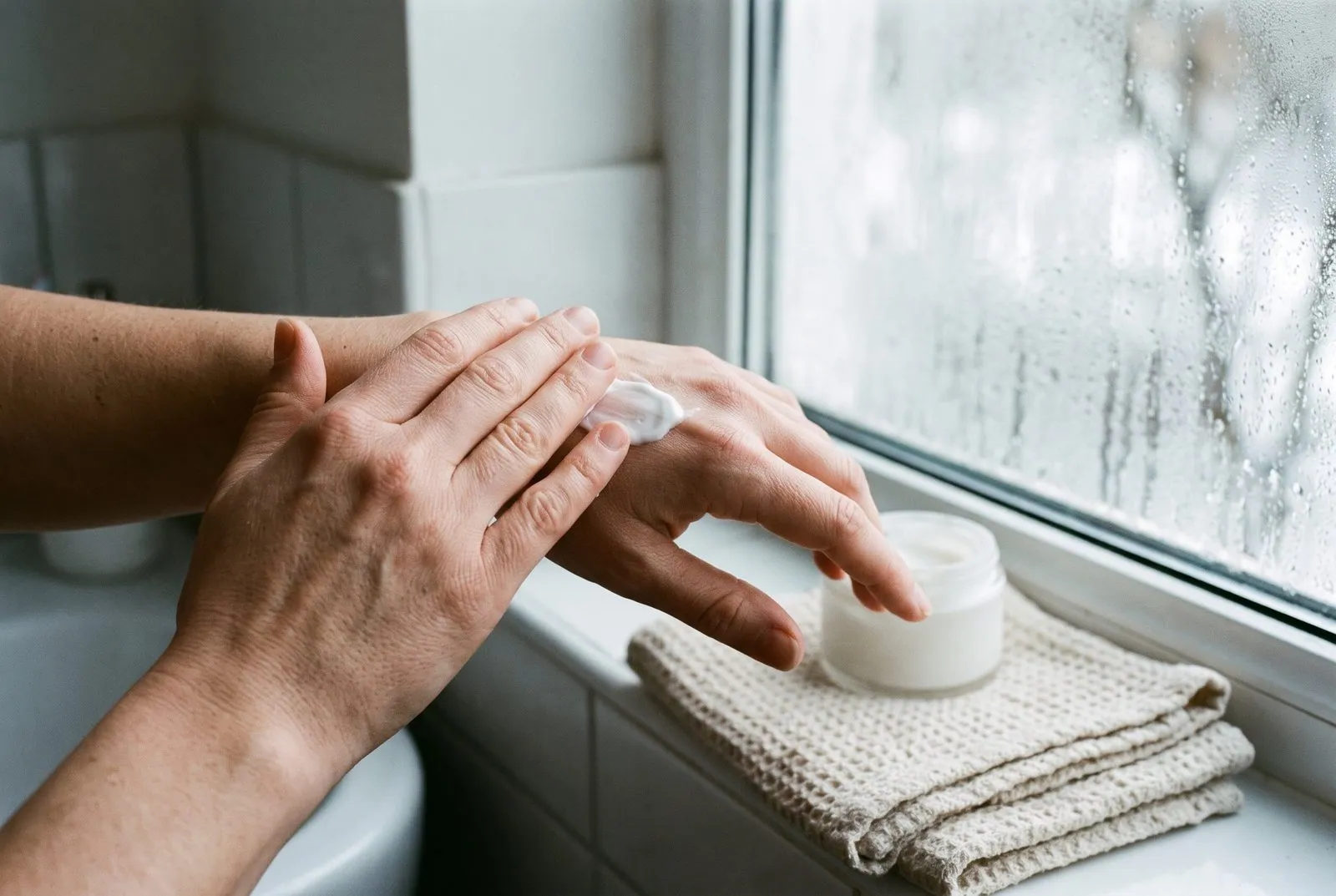
NIA recommends using moisturizers such as lotions, creams or ointments every day. MedlinePlus says to moisturize with an ointment, cream or lotion 2 to 3 times a day, or as often as needed, and notes that moisturizers help lock in moisture so they work best on damp skin. After bathing, it says to pat the skin dry and then apply the moisturizer.
MedlinePlus also suggests looking for moisturizers that contain ceramides. This article does not recommend any product; the label and your own health care provider are the places to compare options.
Air and safety
Since NIA names living in a dry environment as a cause, its home-care list includes trying a humidifier, an appliance that adds moisture to a room. EPA, in a separate document on asthma triggers, cautions that some home humidifiers can disperse microorganisms from their water tanks into indoor air, so cleaning and care matter for those who use one.
NIA also warns against adding bath oil to bath water, because it can make the tub slippery and increase the risk of falling. That is a safety point that matters more with age.
For people helping an older adult with bathing, NIA says caregivers should use a mild soap and a skin moisturizer to help prevent irritation and dry skin, dry between folds of skin and check for rashes.
When to ask for help
NIA says to talk to a doctor if skin is very dry and itchy. It also notes that while some dryness is a normal part of aging, other skin changes may be signs of a serious skin condition. Neither source offers treatment advice beyond these everyday measures, and neither replaces an appointment for skin that is cracking, bleeding or not improving.
MedlinePlus says to contact a health care provider if you feel itchy without a visible rash, if dryness and itching keep you from sleeping, if scratching causes open cuts or sores, or if self-care tips do not relieve the dryness and itching.
What it means for readers
- Use warm, not hot, water and keep bathing short; MedlinePlus says 5 to 10 minutes.
- Moisturize every day, and apply it after patting the skin dry, as the sources describe.
- Skip bath oil; NIA warns it can make the tub slippery.
- If skin is very dry and itchy, or changes seem unusual, NIA says to talk to a doctor.
Data and sources
Each figure in this report comes from the sources below. Every entry lists the organization, the date or period of the data, and the link. Links open in a new tab.
- Skin Care and AgingNational Institute on Aging, NIH · Content reviewed February 11, 2025https://www.nia.nih.gov/health/skin-care/skin-care-and-aging
- Dry skin - self-careMedlinePlus, National Library of Medicine, NIH · Page date: Review date 7/3/2025https://medlineplus.gov/ency/patientinstructions/000751.htm
- Asthma Triggers: Gain ControlEPA · Last updated July 6, 2026https://www.epa.gov/asthma/asthma-triggers-gain-control
Related coverage
All reports
Skin & Sun Sun safety
NCI estimates 112,000 new melanoma cases in 2026, as CDC and dermatologists outline sun protection
Federal cancer statistics set the stage, and the CDC and the American Academy of Dermatology cite different SPF levels.

Skin & Sun
UV Index of 3 or Higher Calls for Sun Protection, CDC Says; EPA Scale Spans 1 to 11+
EPA, CDC and the National Weather Service explain how to read the daily forecast and what to do at each level.

Skin & Sun
NCI's ABCDE Rule: Five Features That Describe Early Melanoma, and Why Change Is the Key Sign
The National Cancer Institute says the first sign is often a change in an existing mole; CDC says melanoma causes more deaths than other skin cancers.