Federal Health Pages Put Muscle-Strengthening at Two Days a Week for Older Adults
CDC and the National Institute on Aging describe how often, and how hard, older adults are advised to work their muscles.
On this page
Key takeaways
- CDC lists at least 2 days a week of muscle-strengthening activity for adults 65 and older, alongside at least 150 minutes of moderate-intensity aerobic activity.
- The National Institute on Aging says to avoid working the same muscle group on two days in a row.
- NIA describes everyday tasks such as carrying groceries and gardening as examples of muscle-strengthening activity.
By the numbers
At least 2 days
Muscle-strengthening days per week, adults 65+ (CDC)
Page dated Dec. 4, 2025
At least 150 minutes
Moderate-intensity aerobic activity per week, adults 65+ (CDC)
Page dated Dec. 4, 2025
75 minutes
Vigorous-intensity alternative (CDC)
Page dated Dec. 4, 2025
At least two days
Muscle-strengthening days per week (NIA)
Content reviewed Jan. 14, 2025
One set of eight to 12 repetitions; two or three sets may be more effective
Repetitions per set (NIA)
Content reviewed Jan. 14, 2025
Avoid working it on any two days in a row
Days in a row for the same muscle group (NIA)
Content reviewed Jan. 14, 2025
About three
Balance exercise sessions per week (NIA)
Content reviewed Jan. 14, 2025
Three: aerobic, muscle-strengthening and balance
Types of exercise NIA says to get
Content reviewed Jan. 14, 2025
What the federal guidance says
The Centers for Disease Control and Prevention lists at least 2 days a week of activities that strengthen muscles as part of its physical activity recommendations for adults 65 and older, on a page dated Dec. 4, 2025. The same page lists at least 150 minutes of moderate-intensity aerobic activity per week, or 75 minutes of vigorous-intensity activity, or an equivalent mix, and says activities that improve balance are recommended too.
The CDC page speaks to adults 65 and older. It does not give a separate figure for adults ages 50 to 64, so this article does not attribute one to the agency.
The National Institute on Aging (NIA), part of the National Institutes of Health, offers a similar frequency in its guidance for older adults. On a page reviewed Jan. 14, 2025, NIA suggests muscle-strengthening activities at least two days per week, working the major muscle groups: the legs, hips, chest, back, abdomen, shoulders and arms.
How much is enough in a session
NIA describes muscle-strengthening as activity in which the muscles contract against resistance, such as lifting a heavy object against the pull of gravity. The agency says the effort should be at least moderate, to the point where another repetition would be difficult.
According to the NIA page, one set of eight to 12 repetitions of each exercise is effective, although two or three sets may be more effective. The agency also says gradual increases in weight, sets, repetitions or days per week will result in stronger muscles.
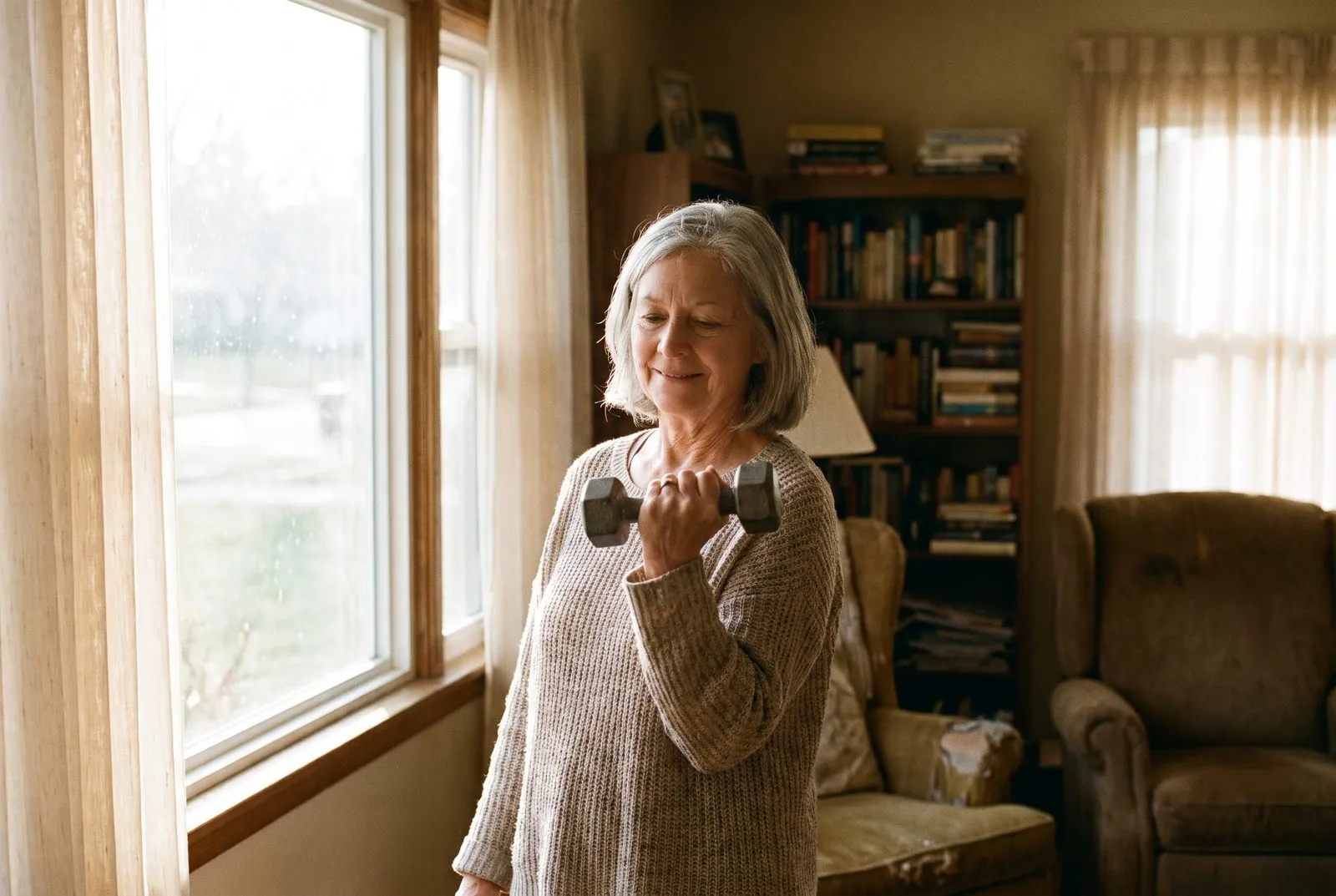
NIA advises that beginners try exercises without weights or resistance bands until they are comfortable with the movements. It lists bodyweight moves such as arm circles, leg raises, squats and lunges, as well as resistance bands, weight machines and hand-held weights.
Recovery and safety notes
NIA says to avoid working the same muscle group on any two days in a row, so the muscles can recover between sessions. The page also warns that overdoing strengthening exercise can cause exhaustion, sore joints and muscle pain or injury.
Among its safety tips, NIA says not to hold the breath during strength exercises, to breathe out during the effort and in while relaxing, and to avoid locking the arm and leg joints in a straight position. If a person is unsure about a particular movement, the page says to seek guidance from a doctor or physical therapist.
The agency also suggests that a session or two with a personal trainer, or a group class at a gym, recreation center or senior center, can help people learn proper form.
Where strength fits with other activity
NIA's page says research has shown it is important to get all three types of exercise: aerobic, muscle-strengthening and balance. It says doing one type can help improve a person's ability to do the others, and that variety helps reduce boredom and risk of injury. Activities such as yoga, dancing and water aerobics can incorporate more than one type.
For balance work, NIA says to aim for about three sessions a week. For aerobic activity, it says to build gradually toward at least 150 minutes of moderate-intensity activity each week, and offers a simple check: if a person is breathing hard but can still hold a conversation easily, the activity is likely moderate intensity.
NIA also says it is a good idea to be as physically active as possible, noting that even light-intensity movement can be beneficial, and that people should try to avoid sitting for long periods.
Why the agencies emphasize it
NIA says muscle-strengthening activity improves physical function and can help people stay independent, making everyday tasks such as getting up from a chair, climbing stairs and carrying groceries easier. It describes this type of exercise as key to maintaining existing strength and slowing the loss of muscle mass.
In a separate NIA page on falls and fractures, last reviewed Sept. 12, 2022, the agency says exercise improves muscles and makes people stronger, and lists lifting weights or using resistance bands among ways to build strength. NIA also says that staying active helps prevent falls, and that a fear of falling should not keep a person from being active.
The federal pages describe general recommendations for older adults, not an individual plan. NIA says that people who find it hard to reach recommended amounts because of a chronic condition should talk with their doctor about what they can do. Readers with health conditions, or who are returning to exercise after a long break, can use that advice as a starting point for a conversation with a clinician.
What it means for readers
- The federal pages point to muscle-strengthening on at least two days each week, with rest days for any single muscle group.
- Everyday tasks such as carrying groceries and gardening appear on NIA's list of muscle-strengthening activities.
- NIA says beginners can start without weights and learn proper form from a trainer, class or physical therapist.
- People with chronic conditions can ask their doctor what level of activity fits them, as NIA's page suggests.
Data and sources
Each figure in this report comes from the sources below. Every entry lists the organization, the date or period of the data, and the link. Links open in a new tab.
- Physical Activity Guidelines for Older AdultsCDC · Page date: Dec. 4, 2025https://www.cdc.gov/physical-activity-basics/guidelines/older-adults.html
- Three Types of Exercise Can Improve Your Health and Physical AbilityNIA · Content reviewed Jan. 14, 2025https://www.nia.nih.gov/health/exercise-and-physical-activity/three-types-exercise-can-improve-your-health-and-physical
- Falls and Fractures in Older Adults: Causes and PreventionNIA · Content reviewed Sept. 12, 2022https://www.nia.nih.gov/health/falls-and-falls-prevention/falls-and-fractures-older-adults-causes-and-prevention
Related coverage
All reports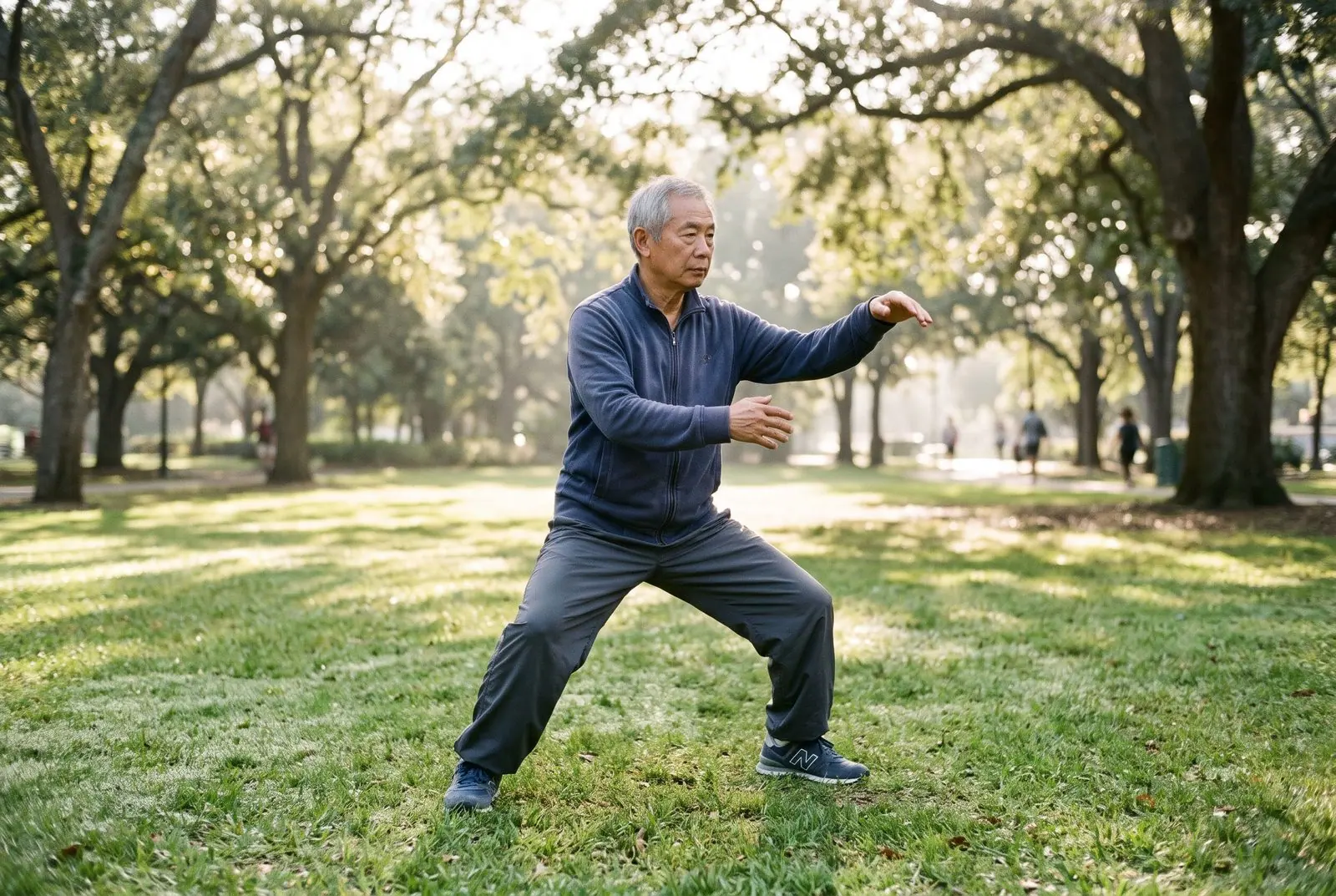
Wellness
CDC: Fall Death Rate Among Older Adults Rose 21% From 2018 to 2024
The agency's latest figures, and what CDC and the National Institute on Aging say people can do about fall risk.

Wellness
CDC: Nearly Half of U.S. Adults Have High Blood Pressure, and Only About 1 in 4 Have It Under Control
What the readings mean, according to CDC and the National Heart, Lung, and Blood Institute.

Wellness
Heart Disease Accounts for 1 in 5 U.S. Deaths, CDC Says; NHLBI Lists Everyday Habits That Support Heart Health
What two federal health agencies say about activity, food, sleep and risk factors.