CDC: More Than 400 Americans Die Each Year From Non-Fire Carbon Monoxide Poisoning
CDC and the Consumer Product Safety Commission outline where to put alarms, how often to replace them and how to heat safely.
On this page
Key takeaways
- CDC says more than 400 Americans die each year from unintentional carbon monoxide poisoning not linked to fires, with more than 100,000 emergency department visits.
- CDC advises CO detectors near every sleeping area and replacing them following manufacturer instructions or every 5 years.
- Both CDC and CPSC say never to run a portable generator inside a home or garage; CPSC says at least 20 feet away from the home, while CDC says more than 20 feet from windows, doors and vents.
By the numbers
more than 400
Annual deaths from unintentional non-fire CO poisoning
CDC page dated Oct. 26, 2026 (no year of data stated)
more than 100,000; more than 14,000
Annual emergency department visits; hospitalizations
CDC page dated Oct. 26, 2026 (no year of data stated)
manufacturer instructions or every 5 years
CDC CO detector replacement
CDC page dated Oct. 26, 2026
more than 20 feet from windows, doors and vents
CDC generator distance
CDC page dated Oct. 26, 2026
more than 200; more than 100
CPSC annual deaths, non-fire CO from consumer products; generator-linked
CPSC page, date not stated
at least 20 feet
CPSC generator distance from homes
CPSC page, date not stated
911
Emergency number if CO poisoning is suspected
CPSC page, date not stated
The scale of the problem
The Centers for Disease Control and Prevention calls carbon monoxide (CO) an odorless, colorless gas that kills without warning. On its "Carbon Monoxide (CO) Poisoning Basics" page, dated Oct. 26, 2026, CDC says more than 400 Americans die each year from unintentional CO poisoning not linked to fires, more than 100,000 visit an emergency department and more than 14,000 are hospitalized.
The Consumer Product Safety Commission (CPSC) gives a related figure on its CO page, which does not show a date: more than 200 people in the United States die every year from accidental non-fire CO poisoning associated with consumer products, and more than 100 of those deaths are linked to portable generators. The two agencies are counting different things, so the numbers should not be added or compared directly.
CDC says everyone is at risk, and that infants, the elderly and people with chronic heart disease, anemia or breathing problems are more likely to get sick from CO.
Symptoms and the role of alarms
CDC lists the most common symptoms as headache, dizziness, weakness, upset stomach, vomiting, chest pain and confusion, often described as flu-like. It adds that people who are sleeping, drunk or under the influence of other substances can die before having symptoms, which is why an alarm matters.
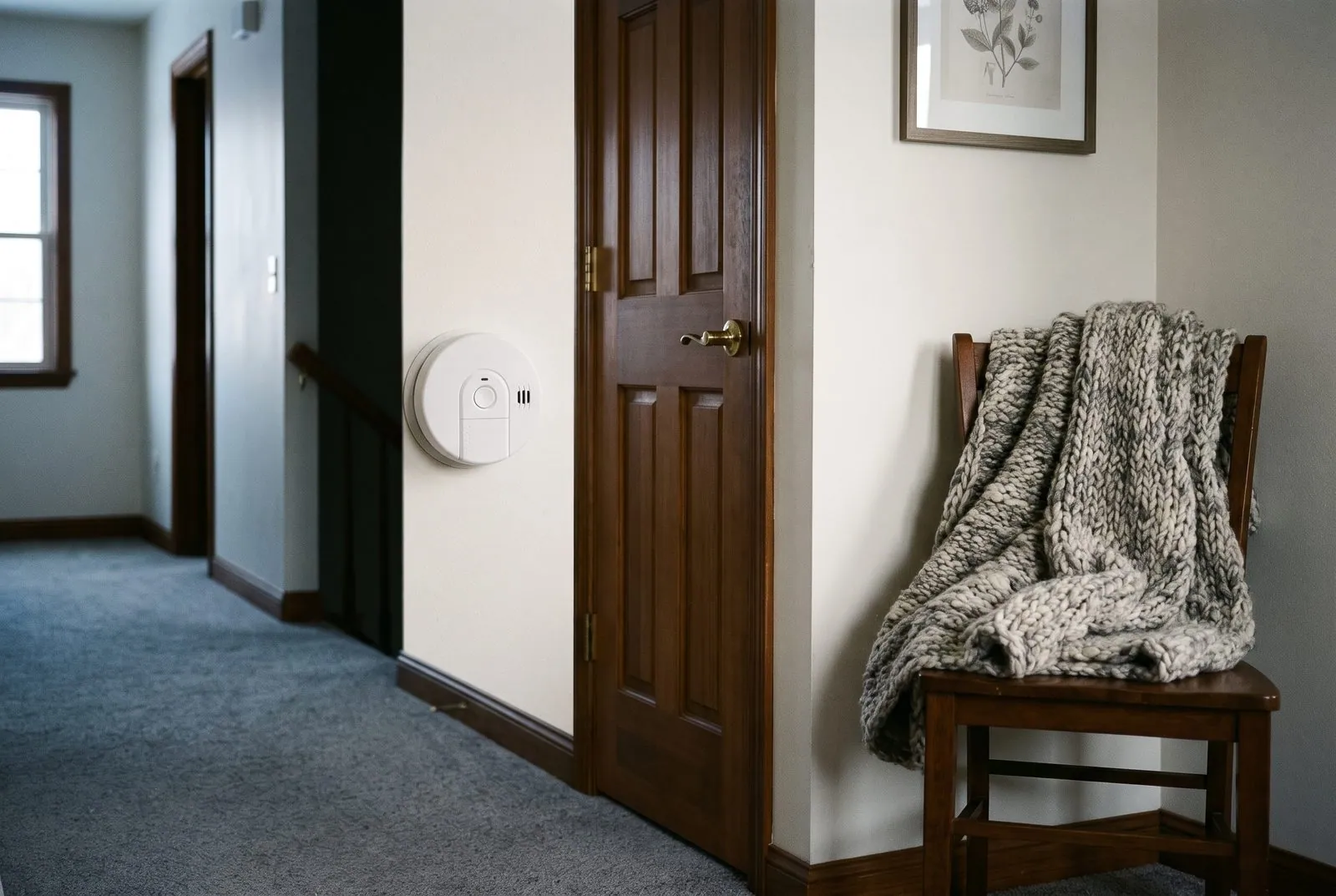
CDC advises installing battery-operated or battery back-up CO detectors near every sleeping area and checking the batteries when clocks change each spring and fall. CPSC says to install battery-operated alarms or alarms with battery backup on every level of the home and outside sleeping areas, and that interconnected alarms are best.
On replacement, CDC says to follow the manufacturer's instructions or replace the detector every 5 years, and it suggests setting a reminder on a phone calendar. CPSC advises that if CO poisoning is suspected, a person should get outside to fresh air immediately and then call 911.
CDC also suggests considering a detector with a digital readout, which it says can show the highest level of CO concentration in the home in addition to sounding an alarm. CPSC adds that people should know the symptoms of poisoning, which it lists as headache, dizziness, weakness, nausea, vomiting, sleepiness and confusion.
Heating equipment checks
CDC says CO is produced any time fuel is burned in cars, small engines, stoves, lanterns, grills, fireplaces, gas ranges or furnaces, and it can build up indoors. For heating, it recommends having the heating system, water heater and any other gas, oil or coal burning appliances serviced by a qualified technician every year, and having a chimney checked or cleaned every year.
It also says to make sure gas appliances are vented properly, never to heat a house with a gas oven, and not to cook or burn anything on a stove or fireplace that isn't vented. CDC says never to burn charcoal indoors, never to use a portable gas camp stove indoors and not to use portable flameless chemical heaters indoors.
If a person smells an odor from a gas refrigerator, CDC says to have an expert service it, since the odor can mean the appliance is leaking CO. When buying gas equipment, it advises choosing equipment carrying the seal of a national testing agency, such as Underwriters' Laboratories.
Generators and vehicles
Generators draw particular warnings. CPSC says one portable generator can produce the same amount of carbon monoxide as hundreds of cars, and that generators should never be used inside homes or garages even with doors and windows open. CPSC says to use them outside only, at least 20 feet away from homes with the exhaust facing away.
CDC's version says to use generators only outside, more than 20 feet away from any windows, doors and vents, and to use a battery-powered or battery backup CO detector in the home when running one. The two agencies' wording differs slightly (at least versus more than), so a safe approach is to keep the generator well beyond that distance.
For vehicles, CDC says never to run a car or truck inside a garage attached to a house, even with the garage door open, and to have a mechanic check the exhaust system every year. This article is general information, not medical advice; anyone who suspects CO poisoning should follow the emergency steps above.
What it means for readers
- Put battery-operated or battery-backup CO alarms near every sleeping area; CPSC also says on every level of the home.
- Replace each alarm following the manufacturer's instructions or every 5 years, as CDC states.
- Have heating systems and chimneys checked every year, and never heat with a gas oven or burn charcoal indoors.
- Run generators only outdoors, more than 20 feet from windows, doors and vents, and if you suspect CO poisoning, get outside and call 911.
Data and sources
Each figure in this report comes from the sources below. Every entry lists the organization, the date or period of the data, and the link. Links open in a new tab.
- Carbon Monoxide (CO) Poisoning Basics | Carbon Monoxide Poisoning | CDCCenters for Disease Control and Prevention · Page date: OCT. 26, 2026https://www.cdc.gov/carbon-monoxide/about/index.html
- Carbon Monoxide | CPSC.govU.S. Consumer Product Safety Commission · Page date: not statedhttps://www.cpsc.gov/Safety-Education/Safety-Education-Centers/Carbon-Monoxide-Information-Center
Related coverage
All reports
Food & Home
CDC: Water Needs Vary by Age, Activity and Health; NIA Tells Older Adults to Drink Throughout the Day
Federal pages give no single number for everyone, but they describe when needs rise and what counts toward fluid intake.

Food & Home Food labels
The updated Nutrition Facts label, explained: added sugars, serving sizes and the 5% and 20% rules
FDA's revised label adds a line for added sugars, enlarges calories and servings, and changes some serving sizes.

Food & Home Food waste
EPA: the average family of four spends almost $3,000 a year on food that goes uneaten
Federal food-waste figures make a case for planning meals before you shop.