CDC Page: U.S. Adults Averaged 17 Teaspoons of Added Sugars a Day in 2017-2018
CDC and the FDA describe what counts as added sugar, the label's 50-gram reference value and the guideline limit CDC cites.
On this page
Key takeaways
- According to CDC, adults aged 20 or older averaged 17 teaspoons of added sugars a day in 2017 to 2018.
- CDC says the Dietary Guidelines recommend that adolescents and adults limit added sugars to no more than 10 grams per meal.
- The FDA's Daily Value for added sugars on the Nutrition Facts label is 50 grams.
By the numbers
17 teaspoons per day
Average added sugars, adults aged 20 or older
2017-2018
19 teaspoons (men); 15 teaspoons (women)
Average added sugars by sex, adults
2017-2018
17 teaspoons per day
Average added sugars, ages 2 to 19
2017-2018
no more than 10 grams of added sugars per meal
Dietary Guidelines per-meal limit cited by CDC, adolescents and adults
CDC page dated April 29, 2026
none
Added sugar guidance for children younger than 11
CDC page dated April 29, 2026
2½ grams per ⅔ cup equivalent
FDA 'Healthy' claim limit example, dairy snacks
CDC page dated April 29, 2026
50 grams
FDA Daily Value for added sugars
content current as of 03/05/2024
reduce added sugars consumption for people aged 2 years or older (Healthy People 2030)
Healthy People objective
CDC page dated April 29, 2026
How much Americans actually eat
A Centers for Disease Control and Prevention page titled "Get the Facts: Added Sugars," dated April 29, 2026, reports that in 2017 to 2018 the average daily intake of added sugars was 17 teaspoons for adults aged 20 or older. For children and young adults aged 2 to 19, the same page also gives an average of 17 teaspoons.
The page breaks the adult figure down by sex, reporting 19 teaspoons for men and 15 teaspoons for women. Those averages come from 2017-2018 data, so they describe that period rather than current habits, and CDC's own wording is that data indicate Americans eat and drink too much added sugar.
CDC adds that consuming too much added sugar can contribute to health problems such as weight gain and obesity, type 2 diabetes and heart disease.
The agency says that a leading objective for Healthy People 2030 is to reduce the consumption of added sugars by people aged 2 years or older. CDC's page also points readers to related resources, including "Be Smart About Sugar" and "Rethink Your Drink," for practical ideas on cutting back. Because the intake averages date from 2017-2018, they may not reflect what people eat today.
What counts as added sugar
CDC defines added sugars as sugars added during the processing of foods. They include sweeteners, sugars from syrups and honey, and sugars from concentrated fruit or vegetable drinks. They do not include the naturally occurring sugars in milk, vegetables and fruits.
The agency names the leading sources in the U.S. diet as sugar-sweetened beverages, desserts and sweet snacks. Its examples of desserts and sweet snacks are cookies, brownies, cakes, pies, ice cream, frozen dairy desserts, doughnuts, sweet rolls and pastries.
The National Institute on Aging's meal-planning page, last reviewed November 23, 2021, makes a similar point for older adults, advising them to choose foods with little to no added sugar, saturated fats and sodium and to avoid sugary drinks.
The limits the sources cite
On limits, CDC's page states that the Dietary Guidelines for Americans recommends that children younger than 11 do not have any added sugar. It says adolescents and adults should also limit sugar consumption, with no more than 10 grams of added sugars per meal. The page also says that no amount of added sugars or non-nutritive sweeteners is recommended or considered part of a healthy or nutritious diet.
CDC attributes these statements to the Dietary Guidelines for Americans, and this article relies on CDC's description of them. The page does not provide a separate daily-gram cap for adults, so this article does not offer one.
For snacks, CDC says added sugar limits should follow the FDA's "Healthy" claim limits, and gives one example: dairy snacks such as yogurt should not exceed 2½ grams of added sugar per ⅔ cup equivalent.
Reading the label
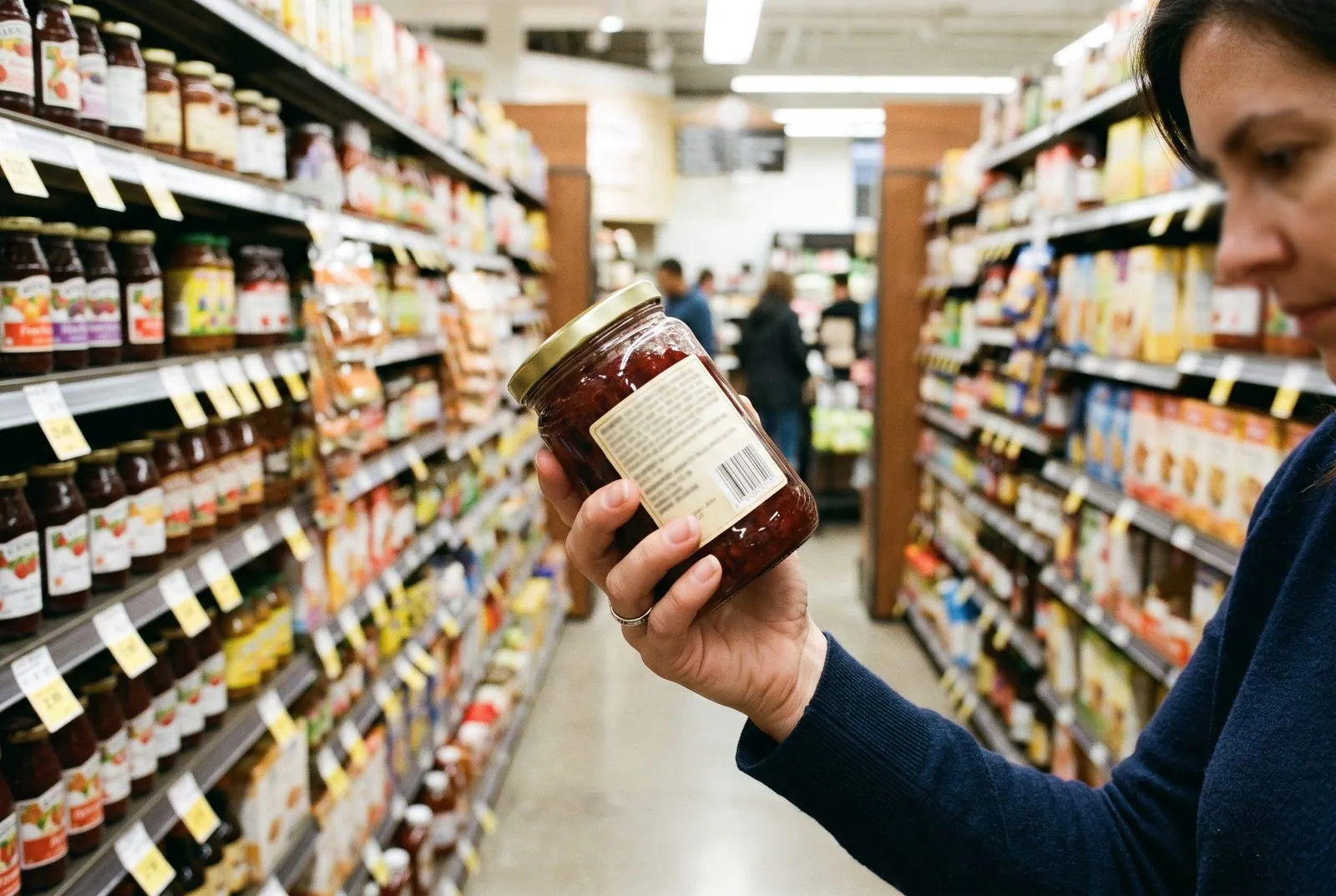
The Nutrition Facts label is where shoppers can see the number. The FDA says the label lists added sugars among its required nutrients, and its reference guide gives a Daily Value for added sugars of 50 grams. That Daily Value, published on a page current as of 03/05/2024, is a label benchmark for comparing products rather than a medical target.
Because added sugars exclude the naturally occurring sugars in fruit and milk, the added-sugars line is the one to compare when two products look similar. A reader can also check the ingredient list for the sweeteners CDC names, such as syrups and honey.
None of this replaces advice from a clinician. People managing diabetes or other conditions should follow the plan their health care team has given them.
CDC's list of leading sources can help a shopper decide where to look first. Beverages, desserts and sweet snacks are named at the top, so the added-sugars line on those items is the most likely to be informative. The pages used for this article do not provide a calculation for converting grams to teaspoons, so none is offered here; readers should rely on the figures as the agencies state them.
What it means for readers
- Compare the added-sugars line on labels, not total sugars, since fruit and milk sugars are not counted as added.
- Treat the 50-gram Daily Value as a label yardstick and the 10-grams-per-meal statement as the guidance CDC cites.
- Look first at sugar-sweetened beverages, desserts and sweet snacks, which CDC names as leading sources.
- If you have diabetes or another condition, follow your clinician's individual advice.
Data and sources
Each figure in this report comes from the sources below. Every entry lists the organization, the date or period of the data, and the link. Links open in a new tab.
- Get the Facts: Added Sugars | Nutrition | CDCCenters for Disease Control and Prevention · Page date: APR. 29, 2026https://www.cdc.gov/nutrition/php/data-research/added-sugars.html
- Daily Value on the Nutrition and Supplement Facts Labels | FDAU.S. Food and Drug Administration · Content current as of 03/05/2024https://www.fda.gov/food/nutrition-facts-label/daily-value-nutrition-and-supplement-facts-labels
- Healthy Meal Planning: Tips for Older Adults | National Institute on AgingNational Institute on Aging, NIH · Content reviewed: November 23, 2021https://www.nia.nih.gov/health/healthy-eating-nutrition-and-diet/healthy-meal-planning-tips-older-adults
Related coverage
All reports
Food & Home
USDA: Leftovers Can Stay in the Refrigerator 3 to 4 Days, but Must Be Chilled Within 2 Hours
The Food Safety and Inspection Service lays out cooling, storage and reheating rules, and its chart gives shorter limits for some foods.

Food & Home
USDA Chart: 165 Degrees F for Poultry and Leftovers, 145 Degrees F for Steaks and Fish
The Food Safety and Inspection Service's minimum internal temperature chart, updated April 14, 2025, ties each food to a number and a thermometer.

Food & Home
NHLBI Details DASH Servings for a 2,000-Calorie Day; NIA Describes a Mediterranean-Style Pattern
Two eating patterns share a plant-forward base. Here is what the federal pages say about each and what the research summary can and cannot show.