USDA: Leftovers Can Stay in the Refrigerator 3 to 4 Days, but Must Be Chilled Within 2 Hours
The Food Safety and Inspection Service lays out cooling, storage and reheating rules, and its chart gives shorter limits for some foods.
On this page
Key takeaways
- USDA's Food Safety and Inspection Service says leftovers can be kept in the refrigerator for 3 to 4 days or frozen for 3 to 4 months.
- Perishable food left at room temperature for more than 2 hours should be thrown away, or 1 hour when the temperature is over 90 degrees F.
- Leftovers should be reheated to 165 degrees F as measured with a food thermometer.
By the numbers
within 2 hours (1 hour if over 90 degrees F)
Time to refrigerate after cooking
page last updated Jul 31, 2020
40 degrees F and 140 degrees F
Bacteria grow rapidly between
page last updated Jul 31, 2020
3 to 4 days
Refrigerator storage of leftovers
page last updated Jul 31, 2020
3 to 4 months
Freezer storage of leftovers
page last updated Jul 31, 2020
165 degrees F
Reheating temperature for leftovers
page last updated Jul 31, 2020
3 to 4 days
Cooked leftovers, casseroles, soups and stews, refrigerator
page last updated Mar 23, 2015
3 to 5 days
Egg, chicken, tuna, ham and macaroni salads, refrigerator
page last updated Mar 23, 2015
1 to 2 days; 3 to 5 days; 1 week
Ground meats; steaks, chops, roasts; hard-cooked eggs
page last updated Mar 23, 2015
1 week; 3 to 5 days
Opened hot dogs; opened luncheon meats
page last updated Mar 23, 2015
1-888-674-6854
USDA Meat and Poultry Hotline
listed on FSIS pages
The two-hour clock
The U.S. Department of Agriculture's Food Safety and Inspection Service (FSIS) sets the first deadline for leftovers: refrigerate them within 2 hours of cooking, or after they are removed from an appliance keeping them warm. FSIS says to throw away perishable foods left at room temperature for more than 2 hours, and for more than 1 hour if the temperature is over 90 degrees F, such as at a summer picnic.
The agency explains the reasoning in terms of temperature. Bacteria grow rapidly between 40 degrees F and 140 degrees F, FSIS says, so hot food should be kept at 140 degrees F or warmer and cold perishable food at 40 degrees F or below. FSIS calls 40 degrees F or below the safe refrigerator-storage temperature.
The "Leftovers and Food Safety" page opened for this article carries a last-updated date of Jul 31, 2020.
Cooling and wrapping
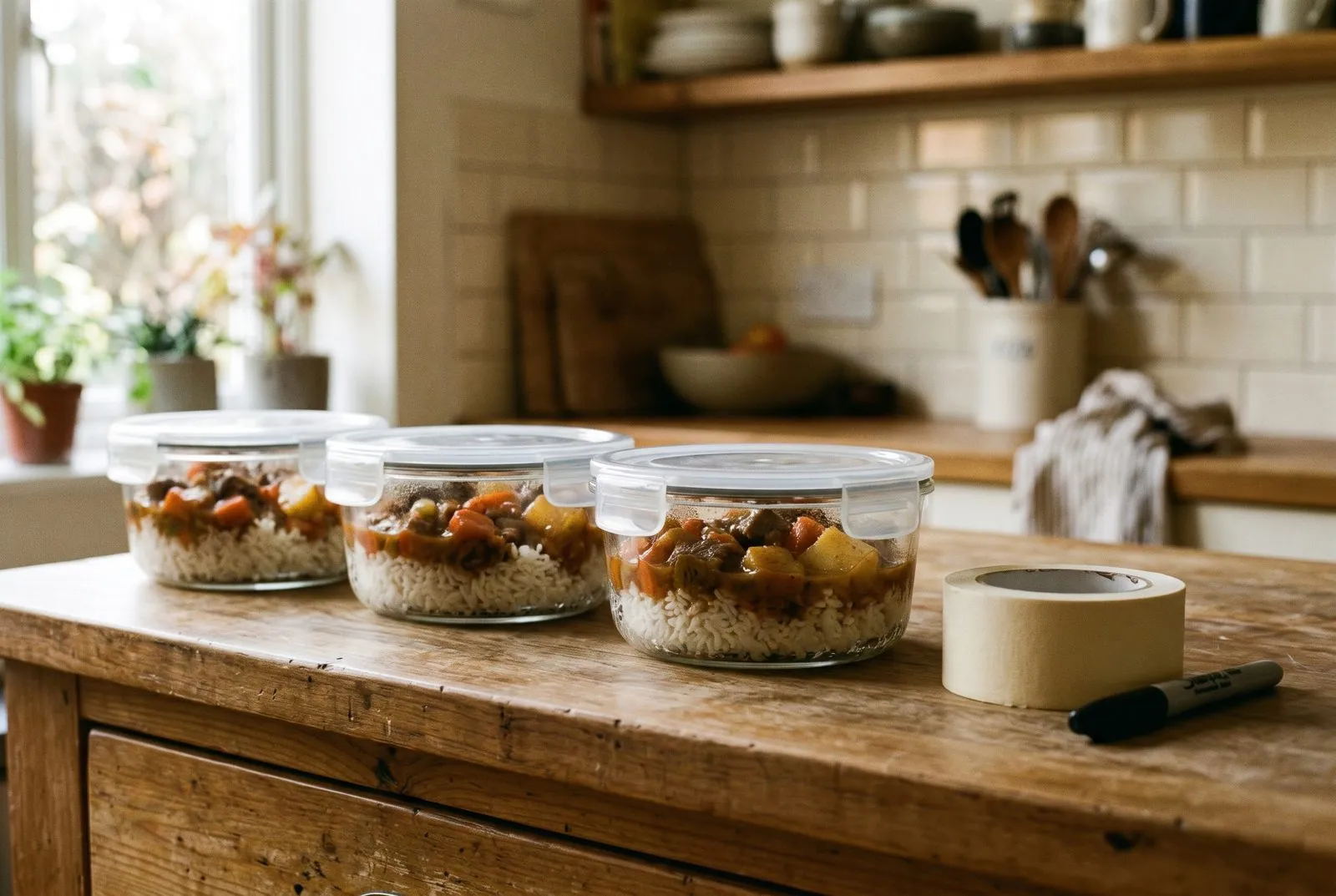
FSIS advises cooling food rapidly by dividing large amounts into shallow containers. A big pot of soup, it says, takes a long time to cool, so dividing it into smaller containers helps it chill quickly. Large cuts, such as whole roasts, hams and turkey, should be cut into smaller portions before refrigerating.
Hot food can go directly into the refrigerator or be chilled in an ice or cold water bath first. FSIS also says to cover leftovers, wrap them in airtight packaging or seal them in storage containers, which helps keep bacteria out, retain moisture and keep food from picking up odors from other items.
None of these steps changes the clock: the 2-hour limit applies whichever method is used.
FSIS adds that for cold items such as chicken salad or a platter of deli meats served at a buffet, food should be kept cold by nesting dishes in bowls of ice or by using small serving trays and replacing them often.
How long they keep
For leftovers generally, FSIS says they can be kept in the refrigerator for 3 to 4 days or frozen for 3 to 4 months. The agency adds that frozen leftovers are safe indefinitely but can lose moisture and flavor if stored longer.
FSIS's separate "Refrigeration & Food Safety" page, which lists a last-updated date of Mar 23, 2015, gives more specific storage times. It shows cooked meat, poultry and fish leftovers, including pieces, casseroles, gravy, broth, patties and nuggets, at 3 to 4 days, and soups and stews at 3 to 4 days. Egg, chicken, tuna, ham and macaroni salads, whether store-prepared or homemade, are listed at 3 to 5 days.
Other items have different limits on that chart: ground beef, turkey, veal, pork and lamb are listed at 1 to 2 days, steaks, chops and roasts at 3 to 5 days, and hard-cooked eggs at 1 week. An opened package of hot dogs is listed at 1 week and an opened package of luncheon meat at 3 to 5 days. Because that page is older, readers may want to confirm against the current FSIS pages.
Reheating and thawing
When reheating, FSIS says leftovers should reach 165 degrees F as measured with a food thermometer, and sauces, soups and gravies should be brought to a rolling boil. It recommends covering leftovers while reheating to retain moisture.
For thawing, the agency lists the refrigerator, cold water and the microwave as safe methods. Food thawed in the refrigerator should be used within 3 to 4 days or can be refrozen. FSIS says it is also safe to reheat frozen leftovers without thawing, although it will take longer.
The pages do not address how individual medical conditions might change these limits, so readers who are pregnant, older or immunocompromised may want to ask a clinician or call the USDA Meat and Poultry Hotline, which FSIS lists as 1-888-674-6854.
For frozen leftovers, FSIS says cold-water thawing is faster than refrigerator thawing but requires more attention, and the leftovers must be in a leak-proof package or plastic bag. Foods thawed by that method should be cooked before refreezing. When thawing leftovers in a microwave, FSIS says to continue heating until the food reaches 165 degrees F as measured with a food thermometer, after which it can be refrozen.
What it means for readers
- Get leftovers into the refrigerator within 2 hours, or 1 hour on a day over 90 degrees F.
- Split big batches into shallow containers so they cool quickly, and keep the refrigerator at 40 degrees F or below.
- Count 3 to 4 days for most cooked leftovers and use a food thermometer to reheat them to 165 degrees F.
- Check the item-specific chart for shorter limits, such as 1 to 2 days for ground meats.
Data and sources
Each figure in this report comes from the sources below. Every entry lists the organization, the date or period of the data, and the link. Links open in a new tab.
- Leftovers and Food Safety | Food Safety and Inspection ServiceUSDA Food Safety and Inspection Service · Last Updated: Jul 31, 2020https://www.fsis.usda.gov/food-safety/safe-food-handling-and-preparation/food-safety-basics/leftovers-and-food-safety
- Refrigeration & Food Safety | Food Safety and Inspection ServiceUSDA Food Safety and Inspection Service · Last Updated: Mar 23, 2015https://www.fsis.usda.gov/food-safety/safe-food-handling-and-preparation/food-safety-basics/refrigeration
Related coverage
All reports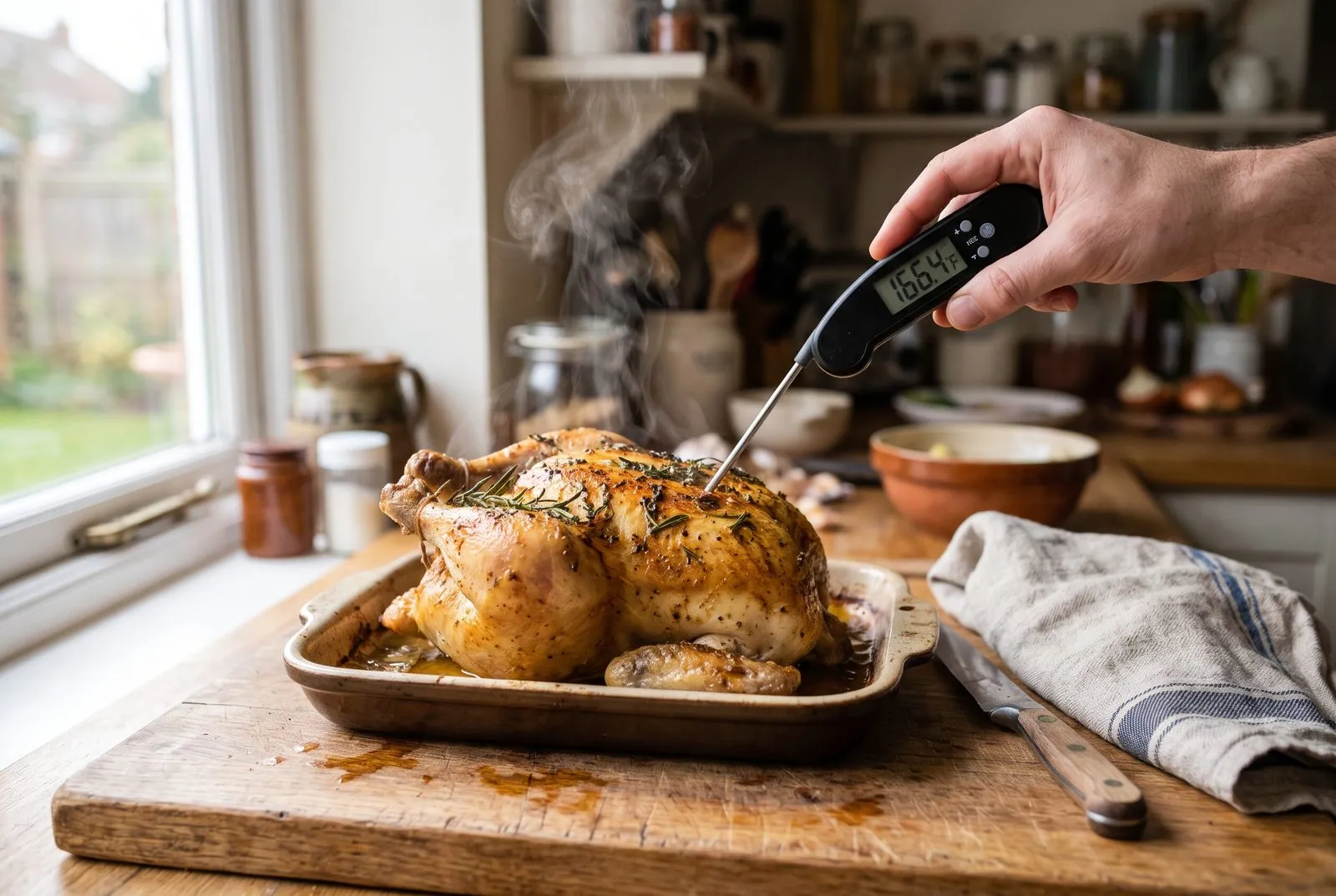
Food & Home
USDA Chart: 165 Degrees F for Poultry and Leftovers, 145 Degrees F for Steaks and Fish
The Food Safety and Inspection Service's minimum internal temperature chart, updated April 14, 2025, ties each food to a number and a thermometer.
Food & Home
NHLBI Details DASH Servings for a 2,000-Calorie Day; NIA Describes a Mediterranean-Style Pattern
Two eating patterns share a plant-forward base. Here is what the federal pages say about each and what the research summary can and cannot show.
Food & Home
EPA: No Safe Level of Lead Exposure; Homes Built Before 1986 More Likely to Have Lead Pipes
The Environmental Protection Agency explains where lead in tap water comes from and lists steps households can take.