USDA Chart: 165 Degrees F for Poultry and Leftovers, 145 Degrees F for Steaks and Fish
The Food Safety and Inspection Service's minimum internal temperature chart, updated April 14, 2025, ties each food to a number and a thermometer.
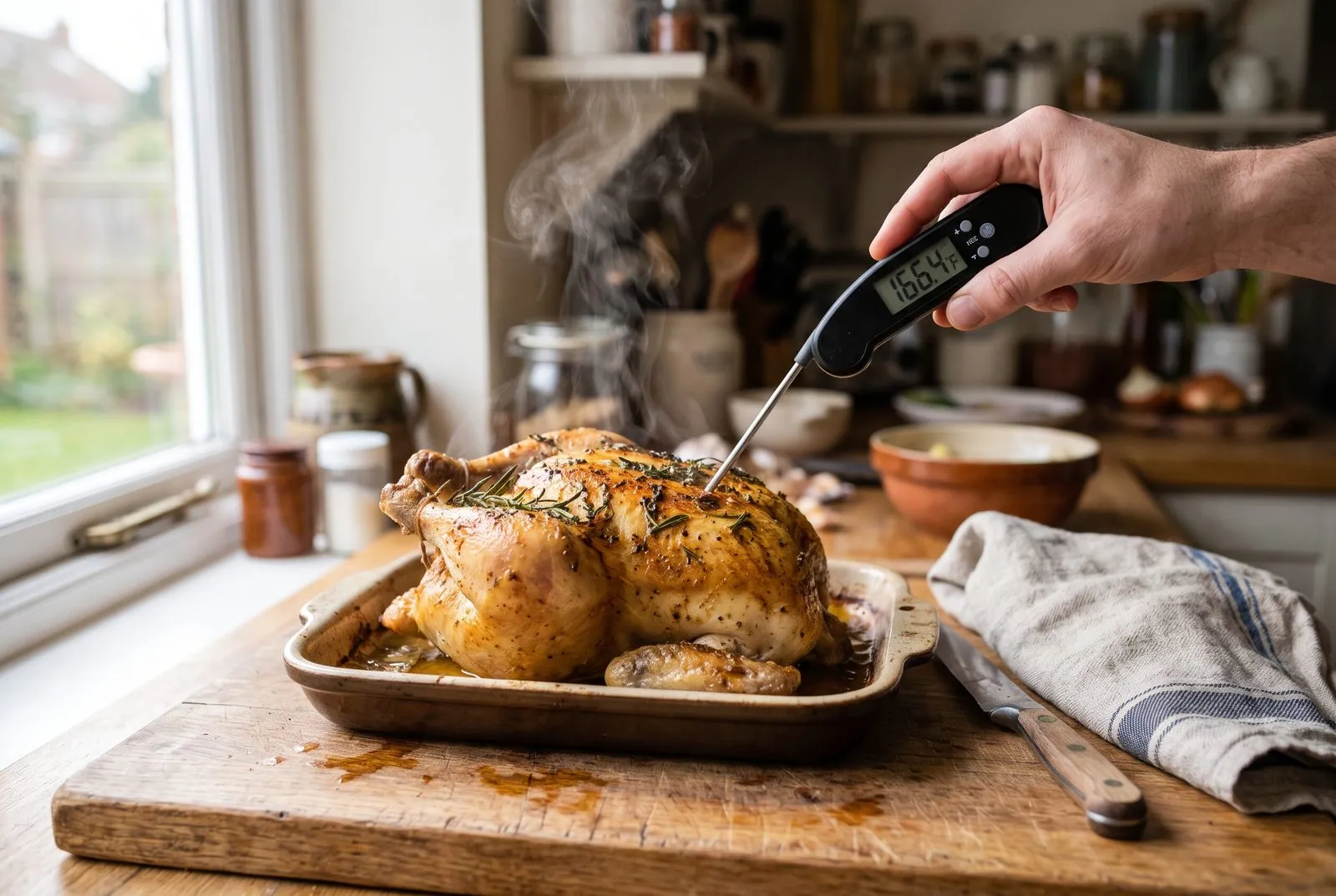
On this page
Key takeaways
- FSIS says all poultry, leftovers and casseroles should reach 165 degrees F; ground meats 160 degrees F; fish and shellfish 145 degrees F.
- Beef, pork, veal and lamb steaks, chops and roasts need 145 degrees F plus a rest of at least 3 minutes.
- Temperatures are measured with a food thermometer before the food leaves the heat source.
By the numbers
145 degrees F plus at least 3 minutes rest
Beef, pork, veal, lamb steaks, chops, roasts; fresh or smoked uncooked ham
page last updated Apr 14, 2025
160 degrees F
Ground meats
page last updated Apr 14, 2025
165 degrees F
All poultry incl. ground poultry, giblets and stuffing
page last updated Apr 14, 2025
160 degrees F
Eggs
page last updated Apr 14, 2025
145 degrees F
Fish and shellfish
page last updated Apr 14, 2025
165 degrees F
Leftovers and casseroles
page last updated Apr 14, 2025
140 degrees F if packaged in USDA-inspected plants; 165 degrees F for all others
Fully cooked ham, to reheat
page last updated Apr 14, 2025
40 degrees F to 140 degrees F
Zone where bacteria grow rapidly
page last updated Jul 31, 2020
1-888-674-6854
USDA Meat and Poultry Hotline
listed on FSIS pages
The chart, in plain terms
The USDA's Food Safety and Inspection Service (FSIS) publishes a Safe Minimum Internal Temperature Chart that says to cook all food to minimum internal temperatures, as measured with a food thermometer, before removing it from the heat source. The page, last updated Apr 14, 2025, adds that for reasons of personal preference, consumers may choose to cook food to higher temperatures.
For beef, pork, veal and lamb steaks, chops and roasts, the chart lists 145 degrees F and says to allow the meat to rest for at least 3 minutes. Fresh or smoked uncooked ham carries the same 145 degrees F and 3-minute rest.
Ground meats are listed at 160 degrees F, and all poultry, including breasts, whole birds, legs, thighs, wings, ground poultry, giblets and stuffing, at 165 degrees F.
Eggs, fish, casseroles and ham
Eggs are listed at 160 degrees F. Fish and shellfish are listed at 145 degrees F. Casseroles and leftovers are both listed at 165 degrees F.
Fully cooked ham has a split rule. According to the chart, cooked hams packaged in USDA-inspected plants should be reheated to 140 degrees F, and all other cooked hams to 165 degrees F.
The chart pairs each number with a food rather than a cooking method, so the same target applies whether a food is baked, grilled or simmered. FSIS's leftovers page, updated Jul 31, 2020, repeats several of these figures and adds that leftovers should reach 165 degrees F when reheated.
The leftovers page organizes the cooking targets by group: red meats such as beef, pork, lamb and veal steaks, chops and roasts at 145 degrees F with a rest of at least 3 minutes; ground beef, pork, lamb and veal at 160 degrees F; and poultry at 165 degrees F. It repeats that consumers may choose to cook to higher temperatures for personal preference.
Why a thermometer, not color
The chart's opening text states a reason for using a thermometer: you cannot see, smell or taste the harmful bacteria that may cause illness. That is why FSIS frames its guidance in measured temperatures.
FSIS organizes its food safety advice around four guidelines: clean, separate, cook and chill. For cooking, the instruction is simply to cook to the right temperature, and for chilling, to refrigerate food promptly.
The leftovers page also says that not cooking food to a safe temperature and leaving food at an unsafe temperature are the two main causes of foodborne illness, and it describes the range between 40 degrees F and 140 degrees F as the zone where bacteria grow rapidly.
The page does not rank foods by risk or explain individual cases, and it frames its figures as minimums. Readers who want the full wording, including the footnote about personal preference, can read the chart directly on the FSIS site.
Using the numbers at home
The chart does not say how to place a thermometer, and this article does not add steps beyond what FSIS states. The agency's own instruction is that temperatures are measured with a food thermometer before the food comes off the heat.
The rest time matters for the cuts that list one. For steaks, chops, roasts and uncooked ham, FSIS says to allow at least 3 minutes of rest. On its leftovers page it explains that this applies for safety and quality, and before carving or consuming.
Readers who have questions about a particular food can call the USDA Meat and Poultry Hotline, which FSIS lists as 1-888-674-6854. The pages reviewed do not offer individual medical advice, so anyone with a health condition that raises their risk from foodborne illness may want to ask a clinician.
Cooking is only one step. FSIS says that after food is safely cooked, hot food must be kept hot at 140 degrees F or warmer to prevent bacterial growth, and that leftovers should be refrigerated within 2 hours. When reheating in a microwave, it notes that microwaves have cold spots, so the temperature should be checked in several places with a food thermometer, and the food should be covered and rotated for even heating.
What it means for readers
- Use a food thermometer, not color or feel; FSIS says to measure before removing food from the heat.
- Remember the three common targets: 145 degrees F for steaks and fish, 160 degrees F for ground meats and eggs, 165 degrees F for poultry and leftovers.
- Give steaks, chops, roasts and uncooked ham at least 3 minutes of rest.
- Call the USDA Meat and Poultry Hotline at 1-888-674-6854 with food-specific questions.
Data and sources
Each figure in this report comes from the sources below. Every entry lists the organization, the date or period of the data, and the link. Links open in a new tab.
- Safe Minimum Internal Temperature Chart | Food Safety and Inspection ServiceUSDA Food Safety and Inspection Service · Last Updated: Apr 14, 2025https://www.fsis.usda.gov/food-safety/safe-food-handling-and-preparation/food-safety-basics/safe-temperature-chart
- Leftovers and Food Safety | Food Safety and Inspection ServiceUSDA Food Safety and Inspection Service · Last Updated: Jul 31, 2020https://www.fsis.usda.gov/food-safety/safe-food-handling-and-preparation/food-safety-basics/leftovers-and-food-safety
Related coverage
All reports
Food & Home
NHLBI Details DASH Servings for a 2,000-Calorie Day; NIA Describes a Mediterranean-Style Pattern
Two eating patterns share a plant-forward base. Here is what the federal pages say about each and what the research summary can and cannot show.

Food & Home
EPA: No Safe Level of Lead Exposure; Homes Built Before 1986 More Likely to Have Lead Pipes
The Environmental Protection Agency explains where lead in tap water comes from and lists steps households can take.
Food & Home
USFA: Test Smoke Alarms Monthly and Replace Them Every 10 Years From the Manufacture Date
The U.S. Fire Administration says alarms belong in every bedroom, outside sleeping areas and on every level, and that age matters.