Food & Home Food labels
The updated Nutrition Facts label, explained: added sugars, serving sizes and the 5% and 20% rules
FDA's revised label adds a line for added sugars, enlarges calories and servings, and changes some serving sizes.
On this page
The updated Nutrition Facts label requires manufacturers to list "Added sugars," in grams and as a percent Daily Value, according to the FDA's page on label changes. Large manufacturers had to comply by January 1, 2020. Single-ingredient sugars such as honey and maple syrup show only the percent Daily Value.
Key takeaways
- The label must show added sugars, in grams and as percent Daily Value.
- Vitamin D and potassium are required on the label; vitamins A and C are no longer required but may be listed voluntarily.
- Calories, servings per container and serving size appear in larger type, with calories and serving size in bold.
- As a general guide, 5% Daily Value or less of a nutrient per serving is low, and 20% or more is high.
By the numbers
January 1, 2020
Date large manufacturers had to comply with the updated label
Page current as of 03/28/2024
2/3 cup
Ice cream reference amount, changed from 1/2 cup
Page current as of 03/28/2024
12 ounces
Soda reference amount, changed from 8 ounces
Page current as of 03/28/2024
5% DV or less
Low amount of a nutrient per serving, as a general guide
Page current as of 03/05/2024
20% DV or more
High amount of a nutrient per serving, as a general guide
Page current as of 03/05/2024
2,000 calories
Daily figure used as a general guide for nutrition advice
Page current as of 03/05/2024
What the updated label added
The FDA says the label now has to include "Added sugars," and that vitamin D and potassium are required, joining calcium and iron, which remain required. Vitamins A and C are no longer required but manufacturers may still list them voluntarily, according to the FDA.
In practical terms, two nutrients were added to the required list and two others became optional, so a label may or may not show vitamins A and C.
Serving sizes and type size
The FDA says it increased the type size for "Calories," "servings per container" and "Serving size," and made calories and serving size bold. It also changed some reference amounts: ice cream moved from 1/2 cup to 2/3 cup, and soda from 8 ounces to 12 ounces.
Packages that hold between one and two servings are now labeled as a single serving, the agency says. For those packages, the calories and nutrients on the label therefore cover the whole package.
Using the percent Daily Value
The percent Daily Value shows how much a serving contributes to a day's intake of a nutrient. As a general guide, the FDA says 5% Daily Value or less of a nutrient per serving is low and 20% or more is high. The agency also notes that 2,000 calories a day is used as a general guide for nutrition advice.
Your own needs may differ from the 2,000-calorie benchmark, so the label is a comparison tool, not a personal prescription.
A quick habit is to glance at the percent Daily Value for added sugars first, then at the nutrients you would like more of, and to treat anything between 5% and 20% as neither low nor high by the FDA's general guide.
Putting the label to work at the store
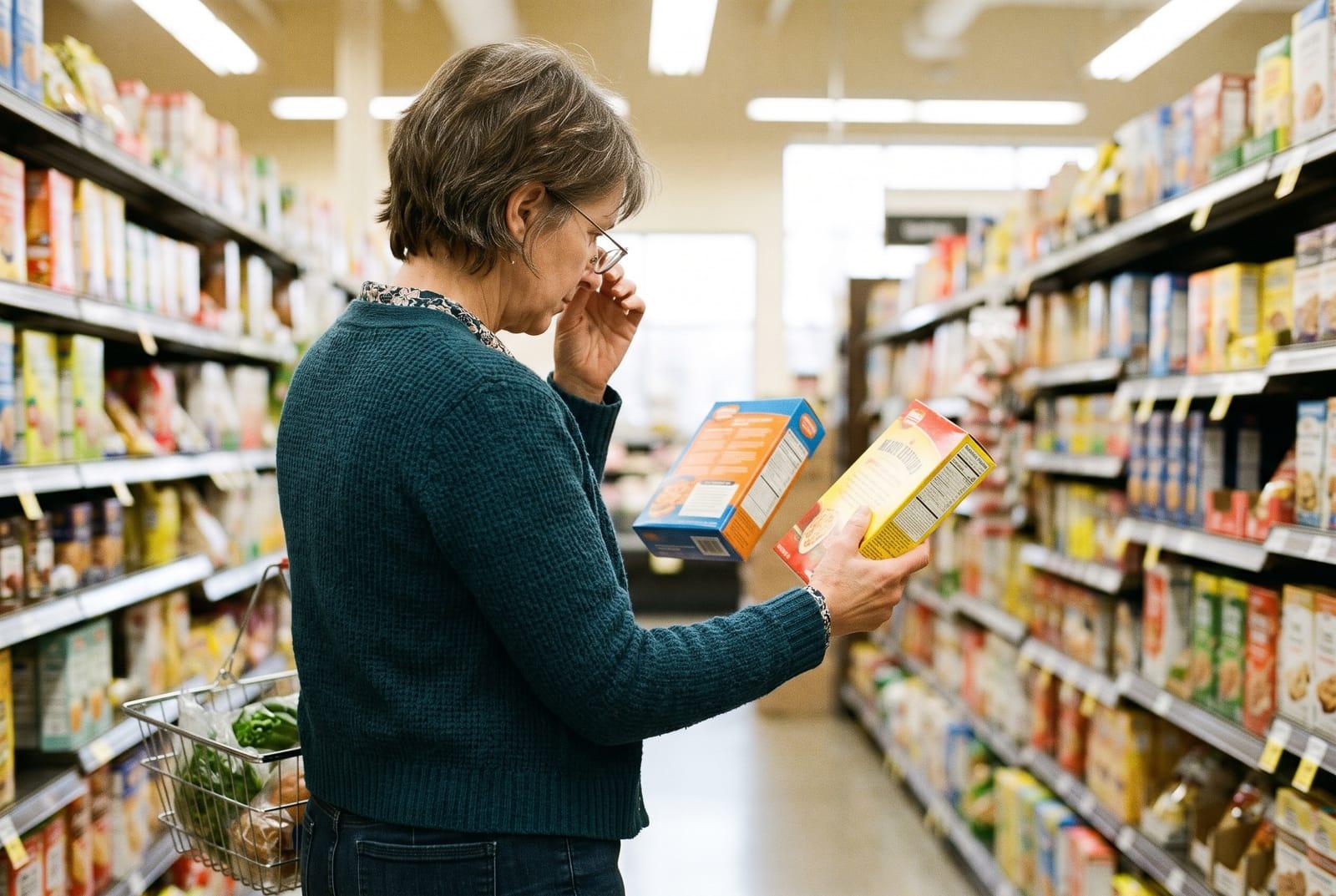
Take two similar products, such as two breakfast cereals or two cans of soup. Compare the serving sizes first, since a label that looks lower may simply use a smaller serving. Then use the 5% and 20% guideposts: scan the percent Daily Value column for added sugars and the other nutrients you are trying to limit, and for the ones you would like more of.
The FDA's percentages are per serving, so eating two servings doubles them. And because 2,000 calories is a general guide, someone who needs more or fewer calories may want to treat the percentages as approximate.
A practical way to compare two products
Start with the serving size and compare it with what you would actually eat, then scale the numbers up or down. Look at added sugars next to the percent Daily Value rather than only the grams, and check the ingredient list for context.
A registered dietitian can help you apply the label to your own meals, especially if you manage a health condition. This report is general information, not individual advice.
What it means for readers
- Check the serving size first, then compare it with the amount you really eat.
- Use 5% and 20% Daily Value as quick filters for nutrients you want less or more of.
- Look at added sugars as both grams and percent Daily Value when you compare similar products.
- The label is a comparison tool. Ask a dietitian if you need personal guidance.
Data and sources
Each figure in this report comes from the sources below. Every entry lists the organization, the date or period of the data, and the link. Links open in a new tab.
- FDA page on changes to the Nutrition Facts labelUS Food and Drug Administration · Content current as of 03/28/2024https://www.fda.gov/food/nutrition-food-labeling-and-critical-foods/changes-nutrition-facts-label
- FDA page on what is on the Nutrition Facts labelUS Food and Drug Administration · Content current as of 03/05/2024https://www.fda.gov/food/nutrition-facts-label/whats-nutrition-facts-label
Related coverage
All reports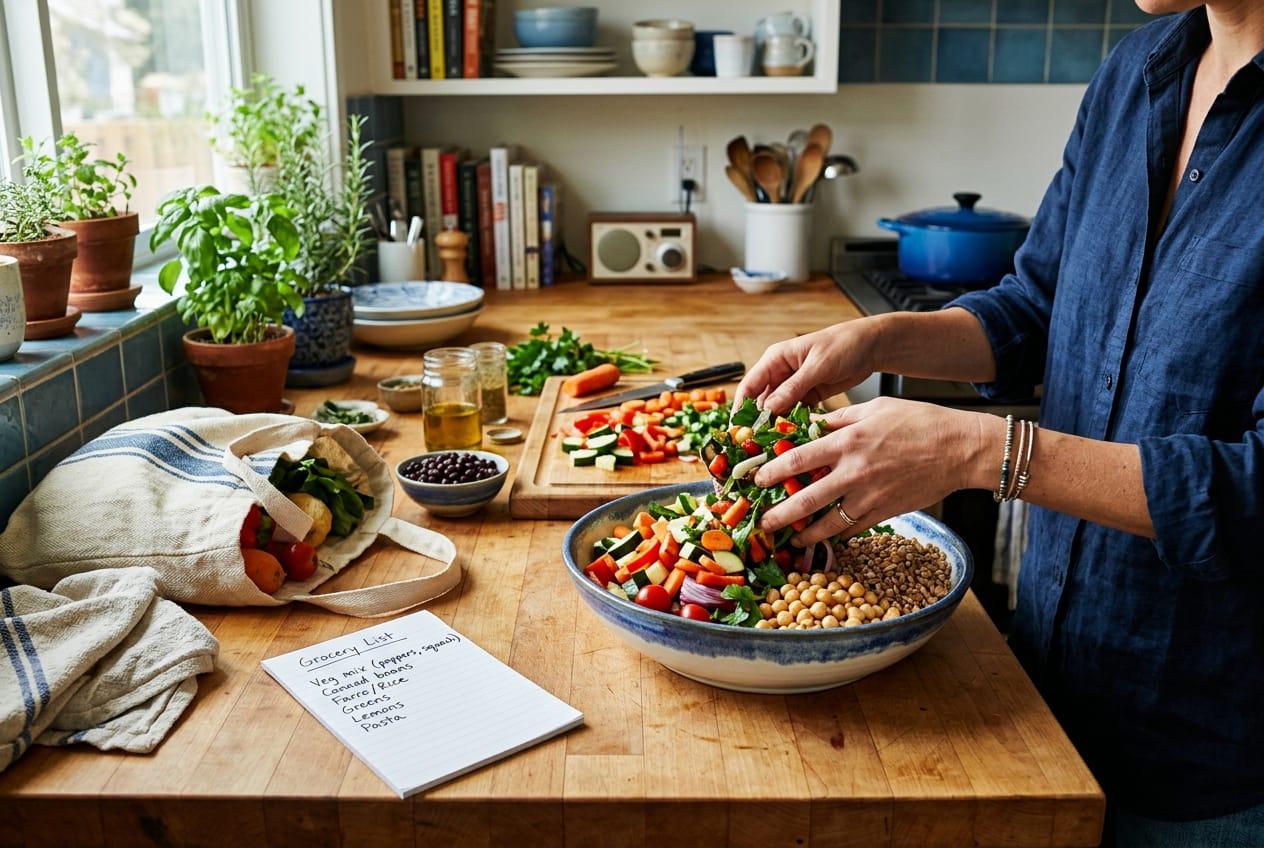
Food & Home Food waste
EPA: the average family of four spends almost $3,000 a year on food that goes uneaten
Federal food-waste figures make a case for planning meals before you shop.
Food & Home
Federal Health Pages Cite 21 to 38 Grams of Fiber a Day; Average Intake Is About 16
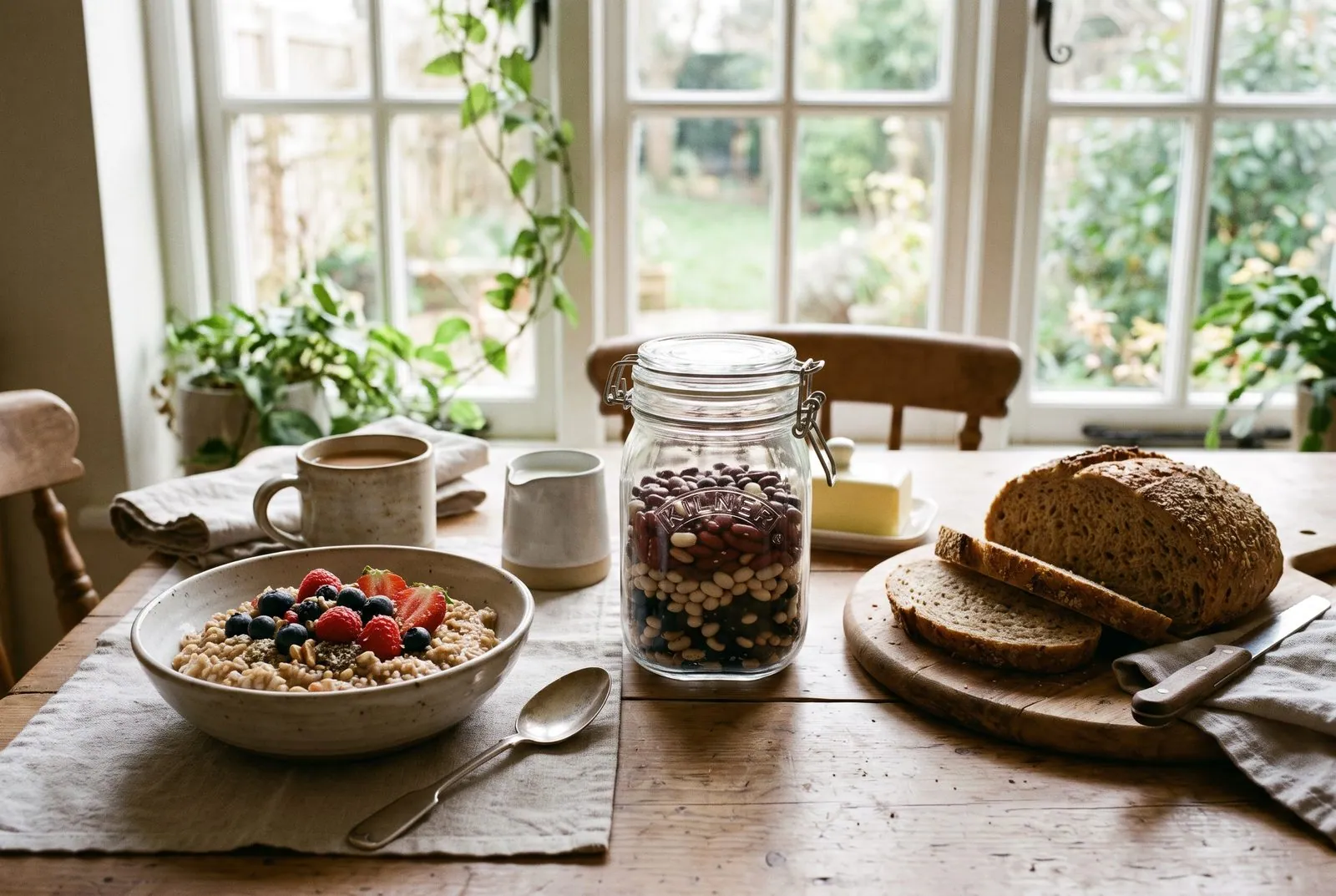
NIH's MedlinePlus and the FDA's label reference values show a gap between what Americans eat and what is recommended, and where fiber is found.

Food & Home
CDC: Americans Average More Than 3,300 mg of Sodium a Day Against a Federal Mark of Under 2,300 mg
Most of the sodium in the U.S. diet comes from processed and restaurant foods, not the salt shaker, according to CDC and FDA.