Emergency Readiness: FDA and Ready.gov Say Keep a Medicine List, Prescription Copies and Records Backed Up
Federal guidance covers which papers to gather, how to store pills and what to do if refrigerated or flooded medicines are affected.
On this page
Key takeaways
- Ready.gov says about half of all Americans take a prescription medicine every day, and an emergency can make refills hard.
- FDA advises keeping an up-to-date list of medicines and a copy of prescriptions with emergency supplies.
- FDA says medicines that touched floodwater or unsafe water should be discarded, even in their original containers.
By the numbers
About half
Share of Americans who take a prescription medicine every day
Page last updated July 1, 2026
Safe deposit box, external drive or the cloud
Where to store important documents
Page last updated March 13, 2026
Should be discarded, even in original containers
Medicines exposed to floodwater or unsafe water
Content current as of September 1, 2026
More than a day
Outage length after which refrigerated medication should be discarded unless label says otherwise
Page last updated June 4, 2026
At least 24 hours
Time a work kit should let someone shelter at work
Page last updated July 1, 2026
Why prescriptions need a plan
Ready.gov, FEMA's public preparedness site, notes that about half of all Americans take a prescription medicine every day, and that an emergency can make it hard to refill a prescription or find an open pharmacy. On its Build a Kit page, it suggests organizing and protecting prescriptions, over-the-counter drugs and vitamins, and adding eyeglasses and contact lens solution to supplies. The page was last updated on July 1, 2026.
The kit page also suggests keeping important family documents, such as copies of insurance policies, identification and bank account records, saved electronically or in a waterproof, portable container.
What the FDA suggests before a disaster
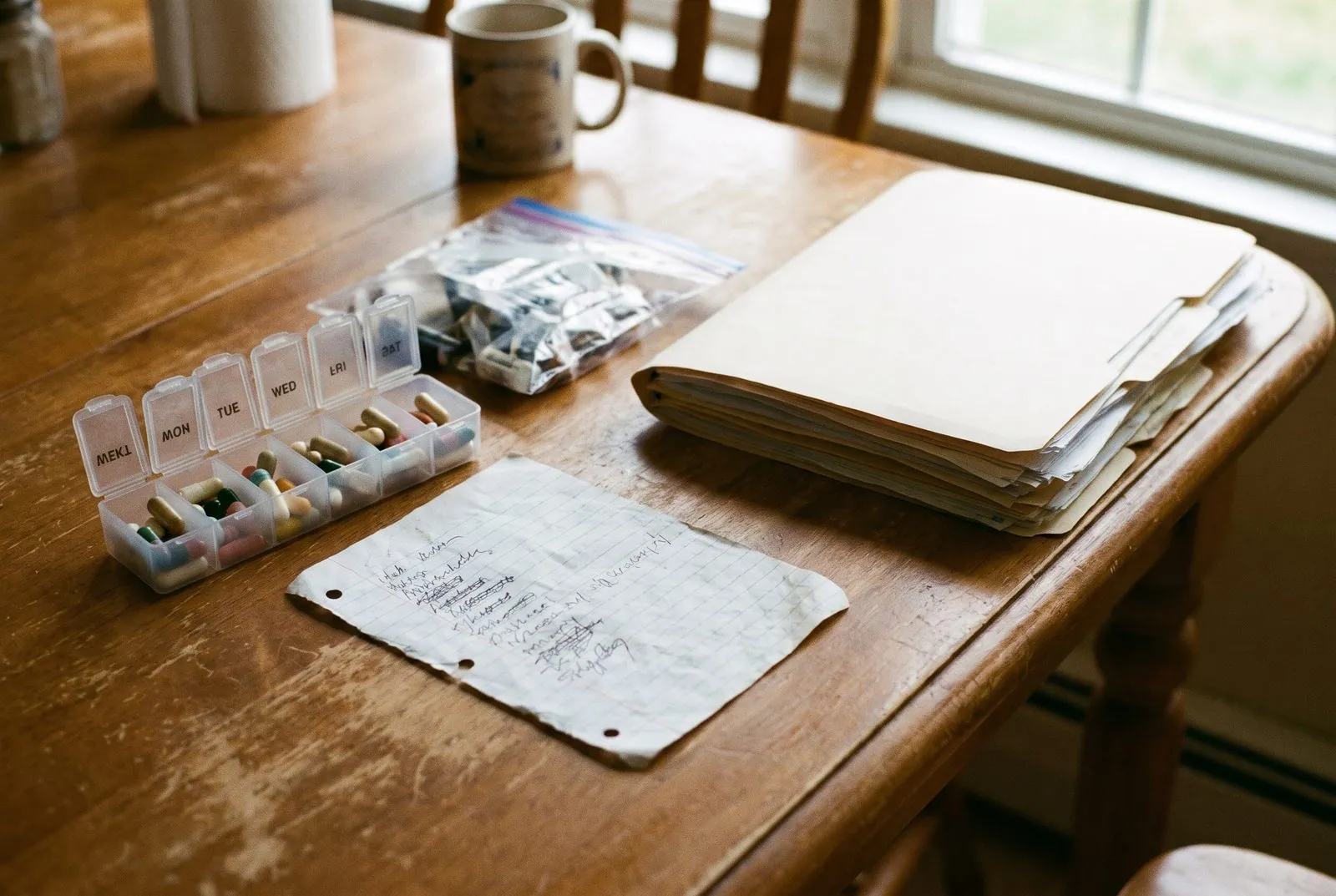
The Food and Drug Administration (FDA) advises keeping an up-to-date list of medicines, including each one's name and strength, what it is for, how much is taken and when. The list should include medical conditions, medical supply needs and allergies. A copy of prescriptions should be kept with emergency supplies.
The agency also suggests knowing how much medicine is on hand and, if pharmacy access may be disrupted, getting early refills. It recommends talking with a pharmacist or health care provider about an emergency supply and learning about your state's emergency refill laws. Where flooding is possible, it advises putting medicine bottles or packages in watertight containers and storing them where floodwater is unlikely to reach. The FDA page shows a content-current date of September 1, 2026.
Papers worth gathering
Ready.gov's Financial Preparedness page says that after a disaster, access to personal financial, insurance, medical and other records is crucial for starting recovery quickly. It lists items such as photo ID, a birth certificate, a Social Security card, insurance policies, sources of income, tax statements, physician information and copies of health insurance information.
For storage, the site suggests a safe deposit box, an external drive or the cloud, so documents can be reached during a disaster. It also urges caution about sharing bank account, Social Security or credit card numbers, and warns that scammers may try to exploit financial fears. It says the government will not call or text about owing money, and suggests reporting such contacts to the Federal Trade Commission. That page was last updated on March 13, 2026.
When medicines have been exposed
The FDA says some medicines, such as insulin and certain liquid antibiotics, require refrigeration. If one was not kept at the recommended temperature during a power outage, the agency advises checking its storage instructions or contacting a pharmacist, health care provider or the manufacturer to learn whether it can still be used. Temperature-sensitive medicines may lose potency, it says, and should be replaced as soon as possible.
For a medicine needed to sustain life, such as insulin, when no replacement is readily available, the FDA says it may be used until a new supply is obtained. Medicines exposed to floodwater or possibly contaminated water should be discarded, even in original containers, and wet or altered medicine should not be used. Ready.gov's power-outage page, by comparison, says to discard refrigerated medication if power is out for more than a day, unless the label says otherwise. Individuals should ask a pharmacist about their own medicines; this is general information.
Keeping a kit current
Ready.gov's Build a Kit page says kits should be maintained after they are assembled. It suggests keeping canned food in a cool, dry place, storing boxed food in tightly closed plastic or metal containers, replacing expired items as needed, and rethinking household needs every year as circumstances change.
Because no one knows where they will be when an emergency strikes, the site recommends preparing supplies for home, work and the car. A work kit, it says, should let someone shelter at work for at least 24 hours, with food, water, medicines and comfortable walking shoes in a grab-and-go case. The page also lists cash or traveler's checks and copies of key documents among additional supplies to consider. It also lists prescription eyeglasses, contact lens solution and non-prescription items such as pain relievers, anti-diarrhea medication, antacids or laxatives as extras to weigh according to individual needs.
What it means for readers
- Write a current list of your medicines with strength, purpose and timing, and keep a copy of prescriptions with your emergency supplies.
- Ask your pharmacist about early refills and your state's emergency refill laws if a disruption is likely.
- Store pill bottles in watertight containers, away from where floodwater could reach.
- Keep copies of ID and insurance papers on a drive, in the cloud or in a waterproof container.
- About half of Americans take a daily prescription, so check supplies before storm or winter season.
Data and sources
Each figure in this report comes from the sources below. Every entry lists the organization, the date or period of the data, and the link. Links open in a new tab.
- Build A Kit | Ready.govReady.gov (FEMA) · Last Updated: 07/01/2026https://www.ready.gov/kit
- Financial Preparedness | Ready.govReady.gov (FEMA) · Last Updated: 03/13/2026https://www.ready.gov/financial-preparedness
- Power Outages | Ready.govReady.gov (FEMA) · Last Updated: 06/04/2026https://www.ready.gov/power-outages
- Safe Drug Use After a Natural Disaster | FDAU.S. Food and Drug Administration · Content current as of: 09/01/2026https://www.fda.gov/drugs/emergency-preparedness-drugs/safe-drug-use-after-natural-disaster
Related coverage
All reports
Preparedness
What FEMA's Ready.gov says belongs in a basic household emergency kit
The federal preparedness site lists water, food, light, communications and first-aid supplies, with a page updated July 1, 2026.

Preparedness
Extreme Heat Is the Deadliest Weather Hazard Each Year, Ready.gov Says; Here Is What It Advises
Federal emergency and weather officials describe who is most at risk and which cooling steps they recommend.
Preparedness
Winter Storm Prep: Ready.gov Explains Watches and Warnings and Flags Carbon Monoxide Risks
The federal preparedness site lays out how to read alerts, stock a home and car, and run generators safely.